
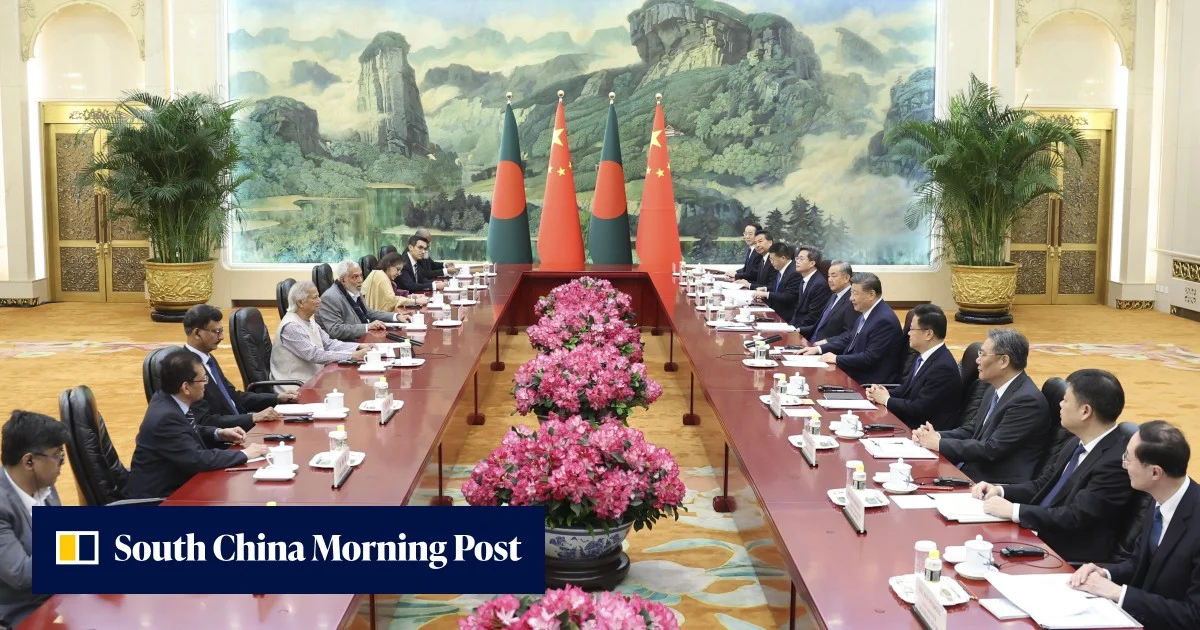
Bangladesh is increasingly positioning itself as a pivotal player on the South Asian political chessboard, deliberately tilting toward China to create a more balanced relationship with India. This shift in diplomatic gravity follows the dramatic collapse of Sheikh Hasina’s Awami League government during the student-led uprisings of 2024. Since then, under both the interim leadership of Nobel laureate Muhammad Yunus and the subsequent administration of the Bangladesh Nationalist Party, Dhaka has moved aggressively to deepen its strategic and economic bonds with Beijing.
The most significant signal of this realignment is the upcoming launch of a 2+2 dialogue between the two nations. This high-level framework will integrate diplomacy and defense into their existing cooperation on trade and infrastructure, marking a sophisticated evolution in how the two countries interact. State Minister for Foreign Affairs Humaiun Kobir confirmed these developments following recent meetings with Chinese Ambassador Yao Wen, suggesting that Dhaka is looking beyond simple commerce toward a comprehensive security partnership.
Experts suggest this movement is less about abandoning one partner than it is about calculated diversification. Shafi Md Mostofa, an associate professor specializing in South Asian foreign policy at the University of Dhaka, notes that China has become indispensable for modernizing national defense and building critical infrastructure. By embracing Beijing’s technological and financial offerings, Bangladesh aims to avoid overreliance on New Delhi while still maintaining necessary engagement with its neighbor.
Ultimately, this hedging strategy reflects a broader ambition within Dhaka to act as an independent strategic actor rather than a junior partner in regional affairs. By playing two global powers against each other for better terms on investment and military hardware, Bangladesh is attempting to carve out a space where it can maximize economic gain without sacrificing its sovereign autonomy. As this new dynamic unfolds, it adds a complex layer of competition to the geopolitical landscape of South Asia.